PRP vs Exosomes Hair Loss: 5 Proven Differences Explained (2026)
When comparing PRP vs exosomes hair loss options, patients often feel overwhelmed by scientific jargon and conflicting online claims. Both approaches belong to the rapidly advancing field of regenerative scalp medicine, but their biological mechanisms, preparation methods, and clinical indications differ significantly. At 360 Hair Clinic in Brighton and Hove, we carry out thorough trichological evaluations to help patients make informed, evidence-based choices for their hair restoration journey.
1. Biological Origins: Autologous Blood vs Cellular Nanovesicles
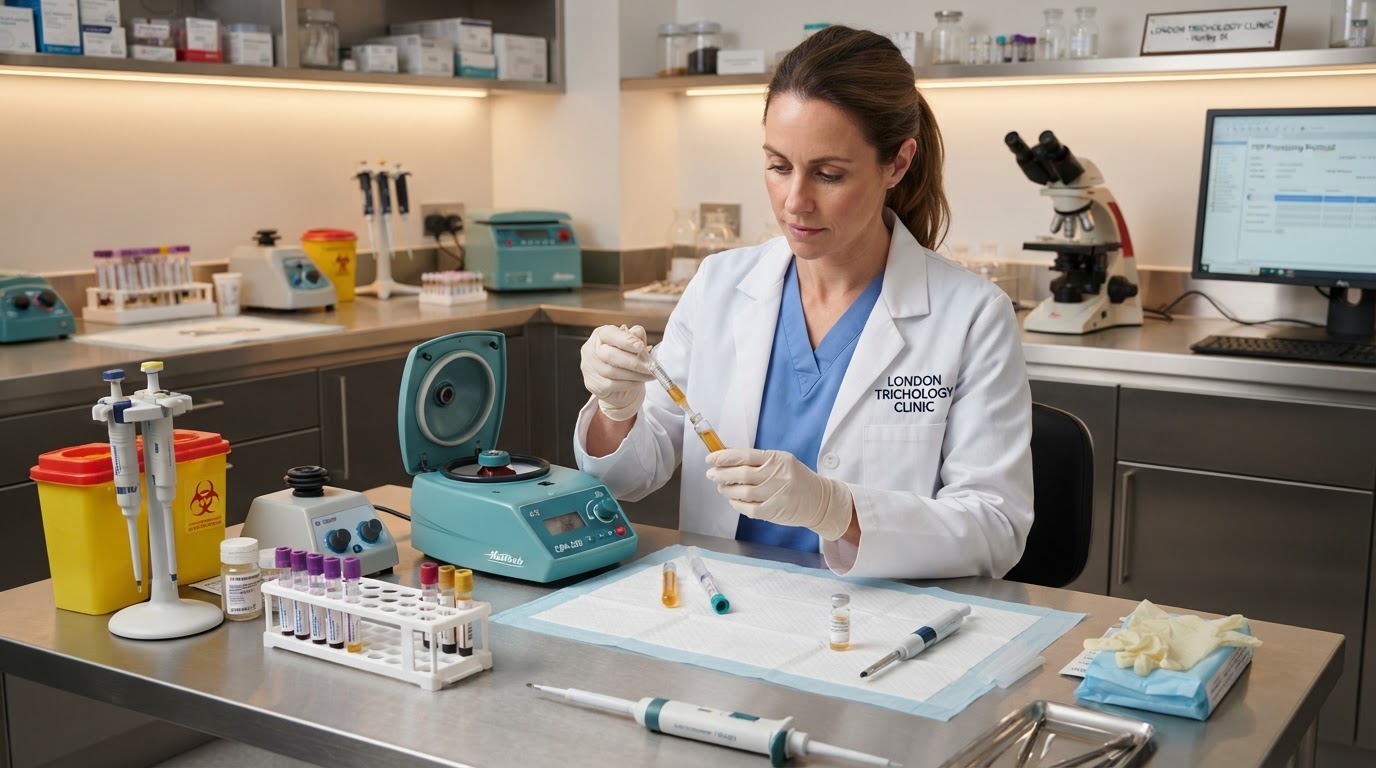
Platelet-rich plasma (PRP) is an autologous treatment derived directly from your own blood. A small sample of peripheral blood is drawn and spun in a precision centrifuge to isolate concentrated platelets suspended in plasma. These platelets contain vital growth factors, including VEGF, PDGF, and FGF, which signal dormant hair follicles to re-enter an active anagen growth phase.
Exosomes, in contrast, are extracellular nanovesicles that act as microscopic biological messengers between cells. Rather than depending on your individual platelet quality, exosome preparations contain billions of purified signalling molecules, mRNA fragments, and specialised proteins engineered to communicate directly with dermal papilla cells.
Because PRP is entirely autologous, it carries virtually zero risk of immunological rejection or adverse biochemical interaction. Exosome therapy provides a standardised concentration of signalling messengers, making the biological origin the first key distinction when evaluating PRP vs exosomes hair loss protocols.
2. Potency and Growth Factor Density in PRP vs Exosomes Hair Loss
A fundamental consideration when assessing PRP vs exosomes hair loss effectiveness is the density and stability of the regenerative cargo delivered to the scalp tissue. PRP therapy produces a physiological cocktail of growth factors influenced by your personal age, hydration, and nutritional status.
At our Brighton and Hove clinic, we utilise advanced Cellenis PRP kits to consistently achieve high platelet concentration. Even so, the regenerative yield remains tied to individual systemic health, which is why baseline health assessments are so valuable.
Exosome formulations typically deliver a higher absolute count of targeted micro-RNA and peptides per millilitre. These laboratory-isolated nanovesicles bypass age-related cellular fatigue, delivering concentrated follicular stimulation directly to areas of progressive thinning.
3. Delivery Technique: Injections vs Microneedling Transdermal Infusion
The patient experience during clinical appointments varies between the two modalities. PRP requires a conventional blood draw followed by precise micro-injections directly into the subdermal layer where hair follicles reside.
While we apply topical numbing agents to minimise discomfort, PRP does involve a series of minor scalp injections across the crown and hairline. The entire clinical procedure takes approximately 45 to 60 minutes from venepuncture to completion.
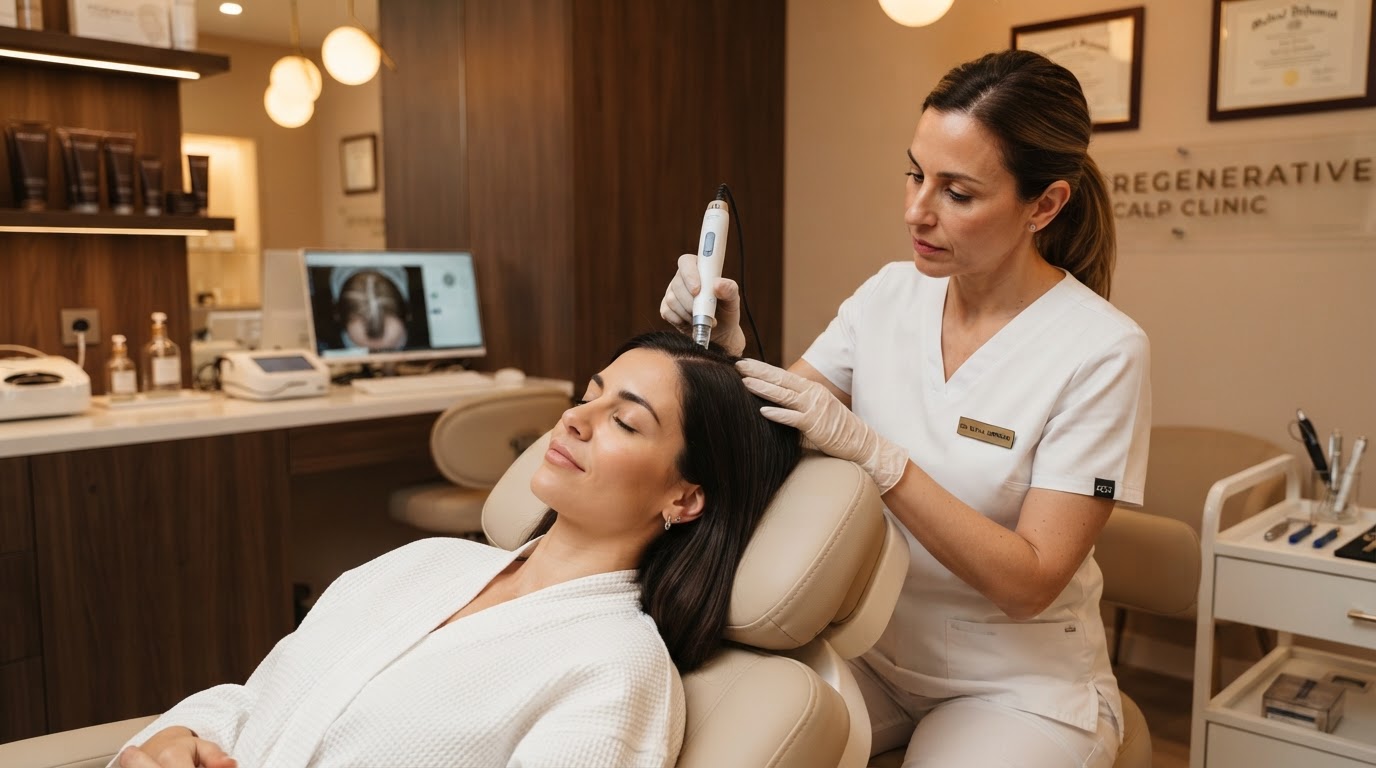
Exosome treatments are frequently delivered using automated clinical microneedling or transdermal electroporation rather than needle injections. For patients who feel anxious about needles or who want a faster, zero-downtime clinic visit, exosome delivery offers an exceptionally gentle alternative.
- PRP involves a quick blood draw and targeted micro-injections across areas of active miniaturisation.
- Exosomes can be introduced via microneedling, creating thousands of microscopic micro-channels without deep needle injections.
- Both treatments allow you to resume standard daily activities immediately following your session in Brighton.
4. Clinical Track Record and Published Research Data
When examining published literature for PRP vs exosomes hair loss, PRP possesses an extensive body of peer-reviewed clinical studies stretching back over 15 years. Dermatological trials confirm that PRP significantly increases hair density, cross-sectional hair shaft thickness, and anagen-to-telogen ratios.
Guidance from organisations such as the British Association of Dermatologists and NHS health information resources confirms that early intervention provides the highest rate of follicle preservation in pattern hair loss. PRP has earned an established place within mainstream trichology worldwide.
Exosome research is newer and exceptionally promising. Clinical data from recent international dermatology conferences shows accelerated follicle reactivation, though long-term ten-year follow-up registries continue to be compiled. As a result, many trichologists view PRP as the proven cornerstone and exosomes as an innovative booster.
5. Candidate Suitability: Who Benefits Most from Each Therapy?
Choosing the right treatment comes down to your personal diagnosis, medical history, and specific pattern of thinning. In men and women experiencing early to moderate androgenetic alopecia, PRP remains an outstanding primary treatment.
Patients who are concurrently planning or recovering from a surgical hair transplant frequently choose PRP to accelerate graft survival and enhance donor area healing. Because the growth factors stimulate vascularisation, blood supply around transplanted follicles improves dramatically.
For patients with stubborn diffuse thinning, needle phobia, or individuals who have plateaued on standalone therapies, exosome therapy or a strategic combination protocol provides powerful synergy. Neither treatment can revive completely scarred or dormant follicles, making timely consultation essential.
- Best for PRP: Men and women with early pattern thinning who want a proven, fully autologous solution.
- Best for Exosomes: Individuals seeking needle-free delivery, rapid cellular signalling, or combination therapy.
- Dual Protocol: Combining both therapies for advanced thinning or post-transplant graft enhancement.
Explore Related Clinic Treatments & Causes
Our Brighton trichologists recommend learning more about the diagnoses, medical protocols, and surgical options available at 360 Hair Clinic:
Authoritative Medical Resources
For further clinical and dermatological guidance on hair loss conditions in the UK, consult these leading medical authorities:
Personalised Guidance for Your Scalp
In the debate over PRP vs exosomes hair loss solutions, there is no single universal winner. The ideal option depends on whether your follicles require autologous growth factors from PRP, high-potency cellular signals from exosomes, or a combined therapeutic plan alongside low-level laser therapy and medical management. At 360 Hair Clinic in Brighton and Hove, our lead trichologists conduct comprehensive consultations to guide you honestly toward the treatment that delivers measurable, lasting results.

Sophie Humphrey
Lead Consultant & Trichologist, 360 Hair Clinic
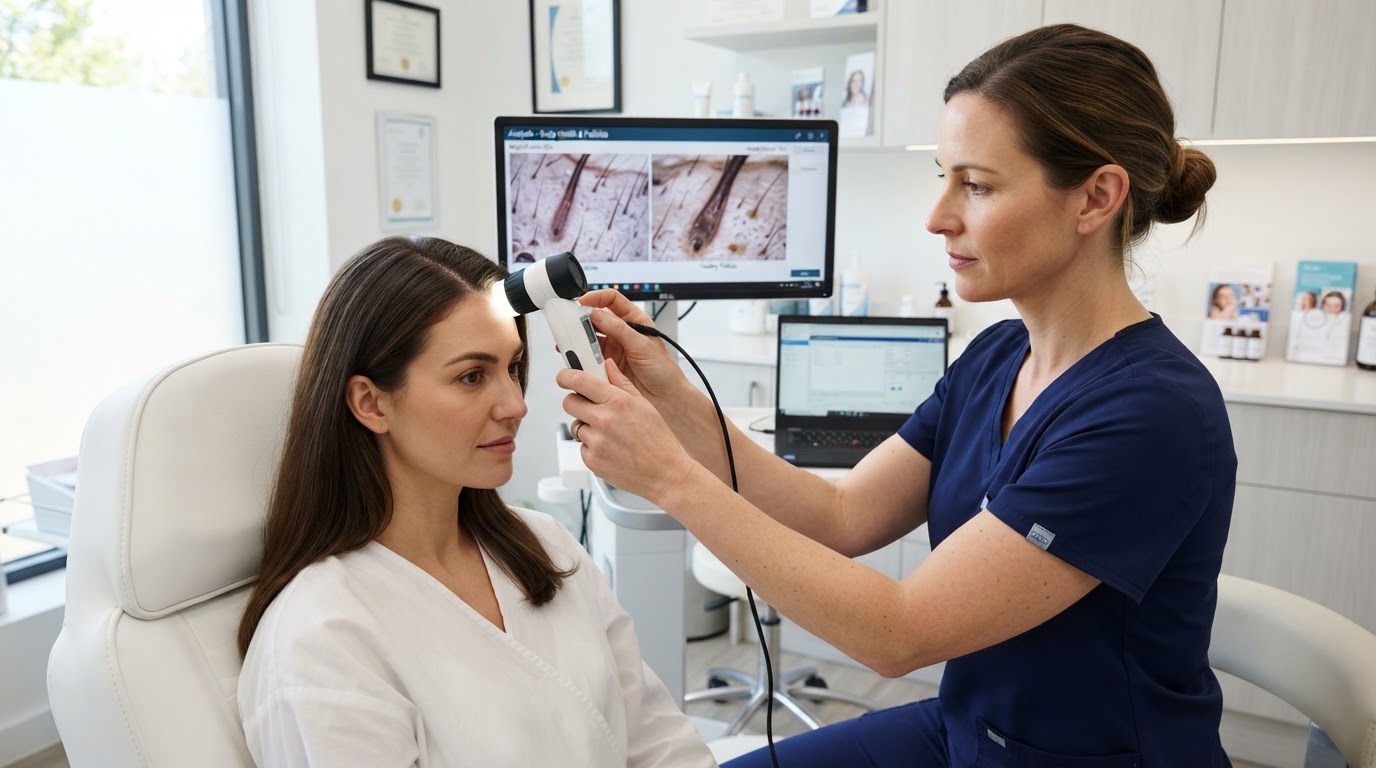
Sophie Humphrey is the lead trichological consultant at 360 Hair Clinic in Brighton and Hove. With over a decade of clinical experience and more than 30,000 treatments overseen, she specialises in multi-therapeutic hair retention, autologous PRP, laser therapy, and trichoscopic scalp diagnostics.
Read Next
Everything you need to know
Common questions about hair loss treatment at 360 Hair Clinic.
Most of our treatments are virtually pain-free. Our PRP therapy uses controlled single sub-dermal injections rather than painful mesotherapy guns, and laser therapy is completely non-invasive. We discuss comfort and any concerns at your consultation.
Hair growth cycles are gradual. Most patients begin to notice visible improvements within 3 to 6 months, with fuller results at 9 to 12 months. We review your progress with clinical photography every 3 months to track your response.
There is no upper age limit for benefiting from treatment. As long as there is active hair follicle function, our trichologist-led protocols can help. Your bespoke plan is tailored to your individual circumstances regardless of age.
We offer treatments from £25 and will always discuss options that fit your schedule and budget during your free consultation. There is no pressure to purchase, and we only recommend what is right for you.
Yes. PRP (Platelet-Rich Plasma) uses your own blood, so there is no risk of allergic reaction. Our experienced trichologist uses precise, controlled injection techniques in a clinical environment to ensure safety and optimal results.
Not necessarily. Many patients respond well to non-surgical treatments. If surgery is the best option, we partner with highly experienced surgeons in the UK and Istanbul and manage your entire journey from quote to post-op care.